


Helwan University strives to be a leading educational and research institution in technology and the arts, and excels in education and sciences according to international quality standards
- Visits 2734727
Integrated Training Program at Capital University to Enhance Skills of International Student Coordinators
Capital University: Developing International Student Coordinators’ Competencies as a Step Toward Internationalization
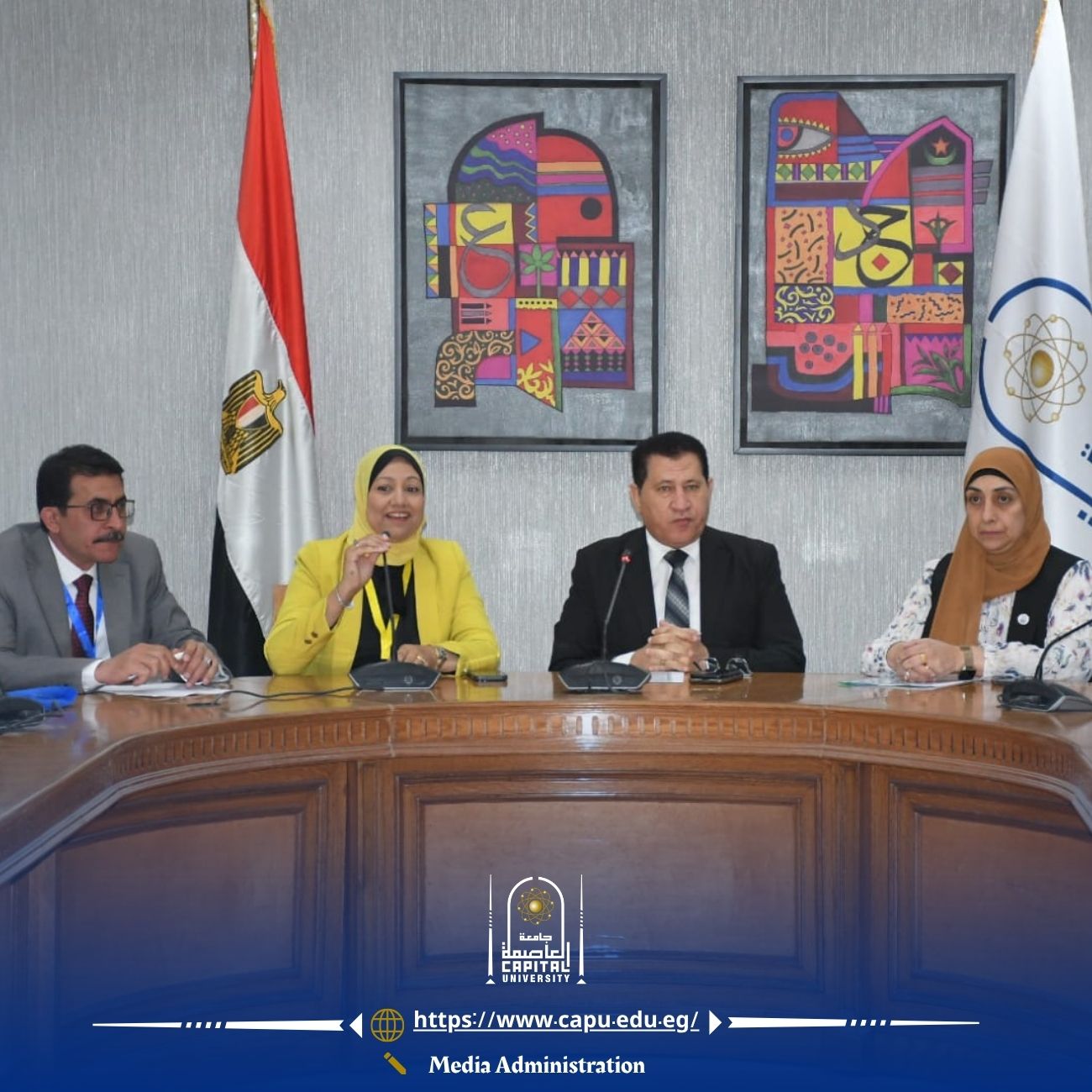
As part of Capital University’s commitment to strengthening the international student care system and enhancing the quality of services provided, the university organized a specialized training program titled “Management and Care of International Students,” with the participation of international student coordinators from various faculties.
The program was held under the patronage of Professor Dr. El-Sayed Kandil, President of Capital University, and Professor Dr. Emad Abu El-Dahab, Vice President for Postgraduate Studies and Research, with the supervision of Professor Dr. Lobna Shehab, Executive Director of the International Students Office.
Professor Dr. El-Sayed Kandil affirmed that prioritizing international students is a strategic direction for Capital University, as part of its vision to strengthen its position as a distinguished regional and international educational destination. He emphasized the university’s commitment to providing an integrated learning environment that supports academic excellence and enhances the integration of international students within the university community.
He further noted that developing the competencies of those responsible for international student affairs is a fundamental step toward delivering high-quality academic and administrative services, thereby improving the overall student experience.
For his part, Professor Dr. Emad Abu El-Dahab stated that the international student file is a key pillar in the university’s internationalization strategy, stressing that faculty coordinators play a central role in ensuring a distinguished educational experience through continuous follow-up and effective communication with students.
In the same context, Professor Dr. Lobna Shehab explained that the International Students Office operates according to an integrated vision aimed at providing comprehensive care for international students, covering academic, administrative, and social aspects. She emphasized the importance of coordination between the office and faculty coordinators to achieve the best outcomes.
Professor Farida Hashem, Assistant Secretary of the University for Postgraduate Studies and Research Affairs, highlighted the significant role of faculty coordinators in following up with international students and providing the necessary support, noting that this directly reflects on service quality and student satisfaction.
Professor Hisham Refaat, Assistant Secretary-General for Education and Student Affairs, also stressed that student activities play a vital role in supporting the integration of international students within the university community, as they contribute to skill development and strengthening their sense of belonging.
The program included several key training modules, such as effective communication skills with international students, comprehensive student support mechanisms, the role of student activities in achieving integration, marketing strategies for academic programs and student recruitment, academic and administrative procedures for international students, as well as institutional coordination and follow-up mechanisms.
The International Students Office team actively participated in delivering the program content, presenting their practical expertise in various aspects related to managing and supporting international students. This contributed to a well-rounded training program that combined both theoretical and practical components.
The program concluded with the honoring of international student coordinators across faculties, who were awarded accredited certificates in recognition of their active participation and commitment to professional development. The five-hour intensive training witnessed strong engagement from participants and resulted in a range of ideas and recommendations aimed at enhancing the international student system and future work plans.
This initiative aligns with Capital University’s ongoing efforts to build a supportive and inclusive educational environment that fosters international student integration and ensures a distinguished university experience.
Helwan University strives to be a leading educational and research institution in technology and the arts, and excels in education and sciences according to international quality standards